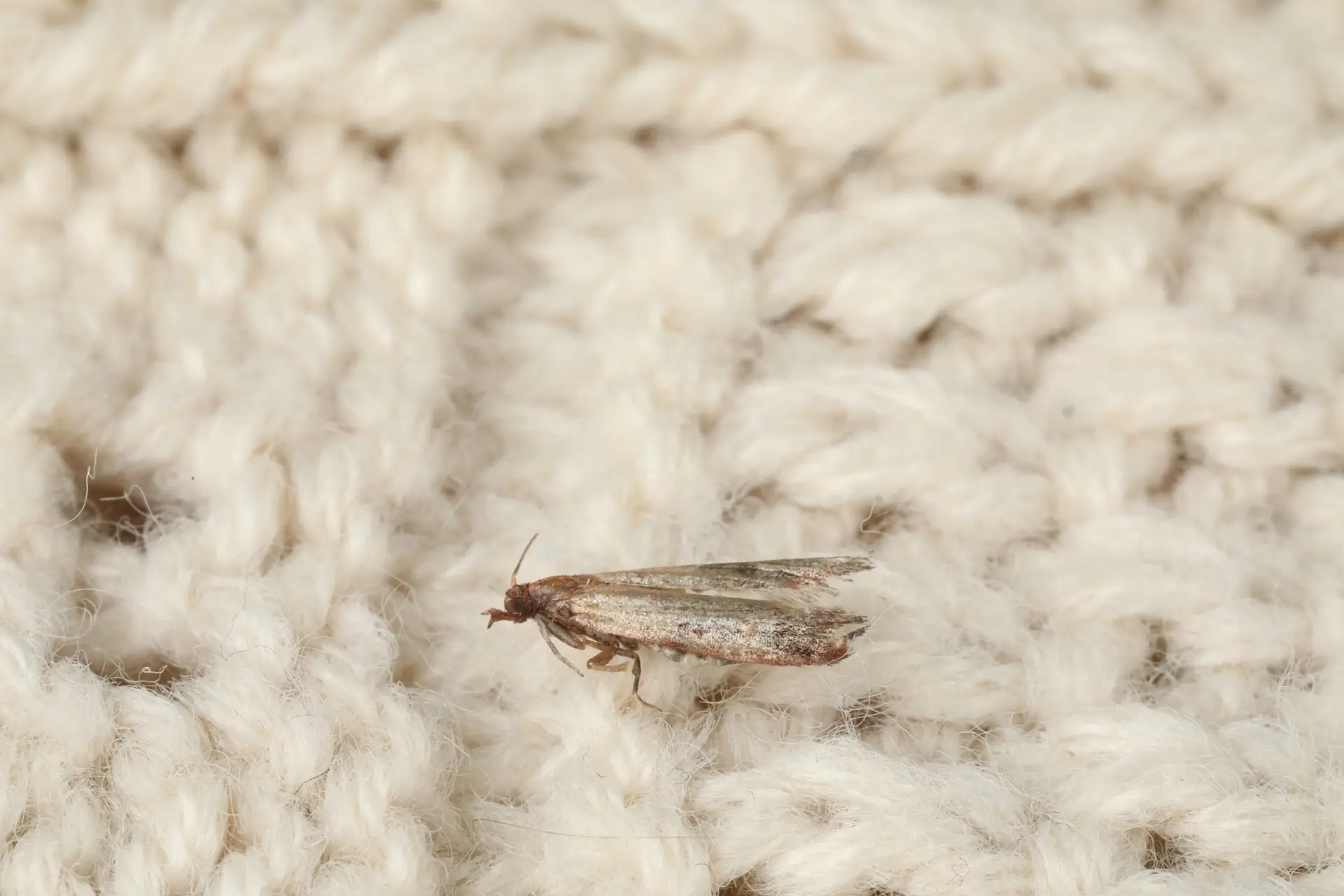
You pulled your wool coat out of storage, ready for the first cold snap, and found moth holes in the sleeve or a smell that made you hold it at arm's length. Take a breath. Neither problem means you need a new coat. You can rescue most stored coats with a mix of home fixes and professional dry cleaning, and the right fix depends on how bad the damage actually is.
Work through these seven remedies in order, from the easiest to the most serious, and you'll know exactly where your coat stands before winter arrives.
Start here. It costs nothing and solves light mustiness on its own.
Garment bags and storage boxes trap air against the fabric, and that trapped air is usually the whole source of the smell. Fresh air pushes it out. If your coat only sat in storage for a season and the smell is faint, you're likely done.
A covered porch or an open garage works fine, too, as long as air can actually move around the fabric instead of sitting stagnant the way it does in a closet. If any smell remains after airing, move to Step 2.
Grab a garment brush before you do anything else to the coat.
Moth larvae and their casings cling to fabric, and shaking out the coat won't dislodge them. Brushing removes larvae before they chew any further, and it lifts the dust and skin cells that draw moths to a garment in the first place. Give this step a few extra minutes if the coat sat in an unfinished basement or attic, where larvae are more likely to have settled in.
Found actual holes? Put the needle down.
A professional can tell you whether or not a hole is a candidate for reweaving or invisible mending, or if it's cosmetic and best left as is. Reweaving costs more on a large panel than a small seam repair, so knowing exactly where the damage sits helps you budget before you commit to anything. Hold that full assessment for Step 6.
Reach for a handheld steamer, not an iron.
A steamer reaches heat high enough to kill moth eggs and larvae without the flattening pressure of an iron, which can crush wool fibers and leave behind a shiny mark. If you don't own a steamer, a garment steaming service or your dry cleaner can run this step for you as part of a full clean.
Still smell it after airing the coat? The odor has worked its way into the fibers, not just the surface. Here's how to remove musty smell from coats once basic airing isn't enough:
Charcoal and baking soda both absorb odor compounds directly, so the smell actually leaves the fabric instead of hiding under a new scent. If the coat still smells musty after two full cycles of this, the odor has likely settled into the lining or padding, and that's your cue to move on to Step 6.
Some coats need more than what you can do at home, and that's normal, not a failure on your part. Once you've aired it out, brushed it, and the odor or the holes are still there, book professional dry cleaning.
If you're nearby, dry cleaning Latham, New York residents count on for exactly this can look your coat over in person and walk you through your options, whether that's reweaving, cosmetic repair, or retiring the coat for good. Most coats come back within a few days, so you still have time to get it done before the first real cold snap hits.
Once your coat is clean and odor-free, lock in that result so you're not back here next October.
A coat that goes into the closet clean has a real head start over one that doesn't. Check on it once mid-season, too; a quick look every few months catches a new moth problem long before you're back to square one next fall.
A musty odor or a few moth holes do not always mean your coat is beyond saving. Stop using home treatments if the odor remains or the fabric shows visible damage, since additional moisture, heat, or scrubbing could make the problem worse.
Best Cleaners provides professional coat cleaning and moth damage assessment at our Latham location. Bring in your coats before the cold weather arrives, and we will tell you plainly whether each garment needs cleaning, repair, or both, without leaving you to risk an expensive coat on guesswork.
Call or text: (518) 490 4696
Email: bestcleaners.info@gmail.com
Free Pickup and Delivery Service is available throughout the Capital Region.
Pickup and delivery hours: Monday to Friday, 8:00 a.m. to 6:00 p.m.